2025-2026 Market Research

The Digital Fortress

Global VPN Market Trends, Emerging Threats & Consumer Insights

A comprehensive analysis of the rapidly evolving VPN landscape, detailing global adoption rates, the top 10 emerging privacy threats, key user growth regions, and the critical factors consumers prioritize when selecting a commercial VPN product.

2.1B+ Projected Users[1, 2]
$76B Market by 2026[3, 4]
Digital Shield Abstract Illustration

Section 01

Global VPN Adoption Rates & Market Trends

The VPN market is poised for robust expansion, solidifying its position as a multi-billion dollar industry.[3, 4] Growth is fueled by geopolitical tensions, increasing internet censorship, and the public's growing awareness of data surveillance.[1, 7] While the United States shows a high penetration rate (estimated between 32% and 46% of the adult population),[1] the most significant per-capita adoption is concentrated in regions facing greater internet restrictions.
Metric2025 Estimate2026 ProjectionSource
Active Users~1.75 Billion~2.1 Billion[1, 2]
Market Valuation~$61.26 Billion~$76 Billion[3, 4]
CAGR15% - 17%15% - 17%[3, 5]
"Indonesia leads the world with an estimated 55% adoption rate, followed closely by India at 43%."[1, 18]

Section 02

Top 10 Emerging Privacy Threats

The cybersecurity landscape is evolving rapidly, with threat actors leveraging advanced technologies to bypass traditional defenses.[6, 7] The following ten threats represent the most critical challenges to digital privacy and security in the 2025-2026 period.

Emerging Privacy Threats Illustration
1

AI-Driven Ransomware & Malware

Cybercriminals are utilizing generative AI to create more sophisticated, adaptive malware that can bypass traditional security filters.[6, 7]

2

Deepfake Social Engineering

The use of AI-generated audio and video to impersonate executives or trusted individuals for fraudulent transactions.[6, 8]

3

Supply Chain Vulnerabilities

Increased targeting of third-party software and service providers to gain access to larger corporate networks.[7, 9]

4

Quantum Computing Threats

The looming threat of quantum computers being able to break current public-key encryption standards.[10, 11]

5

6G & IoT Privacy Risks

The expansion of IoT devices and the transition towards 6G networks create massive new attack surfaces.[9, 12]

6

Automated Decision-Making Bias

Privacy concerns regarding how opaque AI models use personal data to make automated decisions.[8, 13]

7

Bulk Data Exploitation

State-sponsored actors targeting bulk personal data (biometric, genomic, financial) for long-term strategic exploitation.[7, 14]

8

Advanced Phishing

AI-enhanced phishing campaigns that use scraped personal data to create highly convincing, personalized lures.[6, 15]

9

Neural & Biometric Data Theft

The growing collection of highly sensitive neural and biometric data without adequate protection.[8, 16]

10

Regulatory Fragmentation

The complex patchwork of global and state-level privacy laws creating compliance gaps that attackers exploit.[8, 17]

Section 03

Top 10 Key User Growth Regions

Growth in VPN adoption is disproportionately concentrated in regions where users seek to overcome geo-restrictions, combat censorship, or protect themselves from government surveillance.[1, 21] The Asia-Pacific region remains the primary engine of growth.[2, 18]
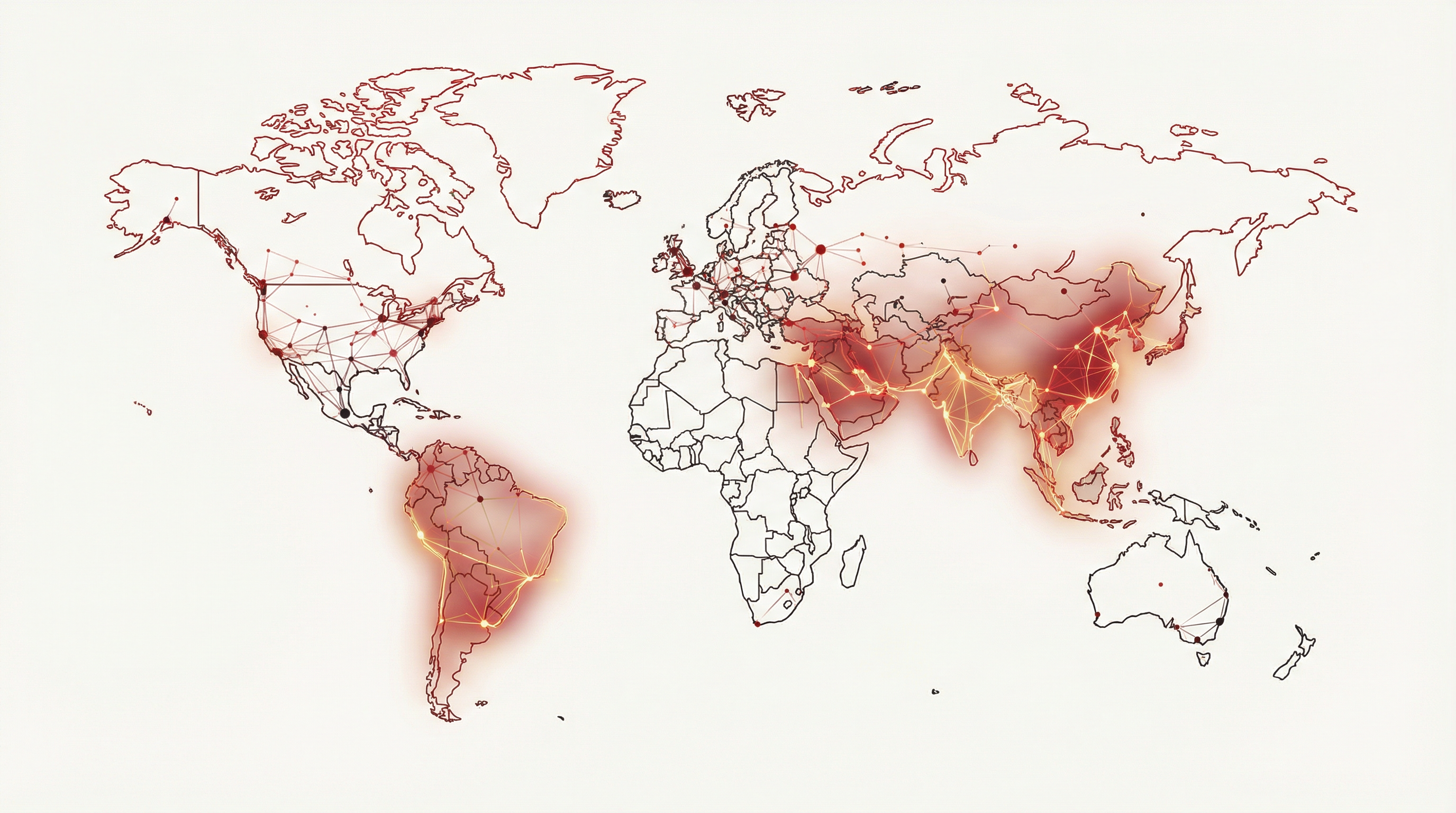

Global User Growth Regions Map
1

Indonesia

55%

High internet censorship and content restrictions.[1, 18]

2

India

43%

Massive, rapidly expanding internet population.[1, 2]

3

United Arab Emirates

38%

Circumvention of VoIP and social media restrictions.[1, 19]

4

Thailand

38%

Increasing digital surveillance and content access.[1, 18]

5

Malaysia

38%

Growing digital economy and secure remote work.[1, 18]

6

Brazil

36%

High demand for secure streaming and digital privacy.[2, 20]

7

Saudi Arabia

35%

Access to restricted content and enhanced privacy.[1, 19]

8

Turkey

32%

Frequent social media and news site blockages.[2, 21]

9

South Africa

29%

Emerging digital market with mobile security focus.[2, 20]

10

Vietnam

28%

Rapidly growing internet population and digital freedom concerns.[18, 21]

Section 04

Top 10 User Priorities for Commercial VPN Selection

For commercial VPN providers, success hinges on meeting a diverse set of user expectations that extend beyond basic privacy.[22, 23] The following ten factors are the most critical in a user's decision-making process.

User Priorities Illustration
#1

Security & Encryption

43%

Military-grade encryption (AES-256) and modern, secure protocols.[1, 22]

#2

Streaming & Entertainment

26%

Ability to reliably bypass geo-restrictions for major streaming platforms.[1, 23]

#3

Privacy & No-Logs Policy

12%

Verified, audited no-logs policy and favorable jurisdiction.[1, 24]

#4

Connection Speed

High-speed servers that minimize latency for gaming and 4K streaming.[22, 23]

#5

Affordable Pricing

Affordable VPN like BearVPN with localized payment options and flexible subscription plans.[23, 25]

#6

Ease of Use

An intuitive, user-friendly interface with a 'one-click connect' experience.[22, 25]

#7

Device Compatibility

Support for multiple simultaneous connections across all platforms.[23, 24]

#8

Server Network

A large number of servers in diverse locations worldwide.[22, 24]

#9

Reputation

Positive reviews and a history of transparent, ethical operations.[24, 25]

#10

Customer Support

Availability of 24/7 live chat support and comprehensive guides.[22, 25]

Conclusion

The Future of Digital Privacy

The 2025-2026 VPN market is defined by a convergence of heightened digital threats and a globally expanding, more discerning user base.[3, 7] The next two years will see providers who successfully integrate advanced security features—like quantum-resistant encryption[10, 11]—with high-performance streaming capabilities and a transparent, privacy-first ethos gain significant market share.

The future of the VPN is not just about hiding an IP address; it is about providing a comprehensive, user-friendly digital fortress against an increasingly complex and hostile online world.[7, 8]

References & Sources

This report synthesizes data from multiple authoritative sources in cybersecurity, market research, and digital privacy. All statistics and projections are based on the most recent available data as of January 2025.

1
VPN Statistics for 2025

Security.org • January 2025

2
Global VPN Usage Report 2025

Surfshark Research • 2025

3
VPN Market Size & Share Analysis

Mordor Intelligence • 2025

4
Virtual Private Network Market Report

Grand View Research • 2025

5
VPN Market Forecast 2025-2030

MarketsandMarkets • 2025

6
2025 Cybersecurity Predictions

SentinelOne • December 2024

7
Global Cybersecurity Outlook 2025

World Economic Forum • January 2025

11
Post-Quantum Cryptography Standards

National Institute of Standards and Technology • August 2024

12
IoT Security Trends 2025

Gartner • 2025

15
Phishing Trends Report 2025

Anti-Phishing Working Group • 2025

16
Biometric Data Privacy Laws

National Conference of State Legislatures • 2024

17
18
VPN Adoption by Country 2025

GlobalWebIndex • 2025

20
Latin America Digital Report

We Are Social • January 2025

21
Internet Freedom Report

Freedom House • 2024

22
Consumer VPN Survey 2025

PCMag • January 2025

23
Best VPN Services 2025

CNET • January 2025

24
VPN Trust Report

Center for Democracy & Technology • 2024

25
VPN Buying Guide

Tom's Guide • January 2025

Methodology Note: Market projections are based on compound annual growth rate (CAGR) analysis from multiple industry reports. Regional adoption rates are derived from consumer surveys and traffic analysis. All sources were accessed between December 2024 and January 2025.